


Dry Age-Related Macular Degeneration (Dry AMD) is a progressive eye condition affecting the macula, the part of the retina responsible for central, detailed vision. It is the most common form of AMD — accounting for around 90% of all AMD cases — and typically develops gradually over years.
As the condition progresses, symptoms can include:
• Blurred or fuzzy central vision
• Difficulty reading, recognising faces, or seeing in low light
• Distortion of straight lines or central blind spots
Dry AMD occurs as retinal cells age and deteriorate, leading to thinning of the macula and the build-up of tiny deposits called drusen. Although it usually doesn’t cause total blindness, it can significantly impair quality of life and independence if left unmanaged.
Until now, the only ways to manage the condition have been through dietary supplements and lifestyle changes.
How Does Photobiomodulation Work?
Photobiomodulation is a non-invasive treatment that harnesses specific wavelengths of light to support eye health at a cellular level. Unlike surgery or injections, PBM uses gentle visible light (red and yellow) delivered through specialised masks to stimulate retinal cells.
At its core, PBM targets the mitochondria — the “powerhouses” inside cells — to:
• Boost production of ATP, the energy source cells need to function
• Reduce harmful oxidative stress and inflammation
• Support natural cellular repair processes
This combination helps retinal cells maintain function, slows the progression of degeneration, and can help preserve central vision for longer. The treatment may also provide protection against wet AMD by inhibiting VEGF using yellow light.
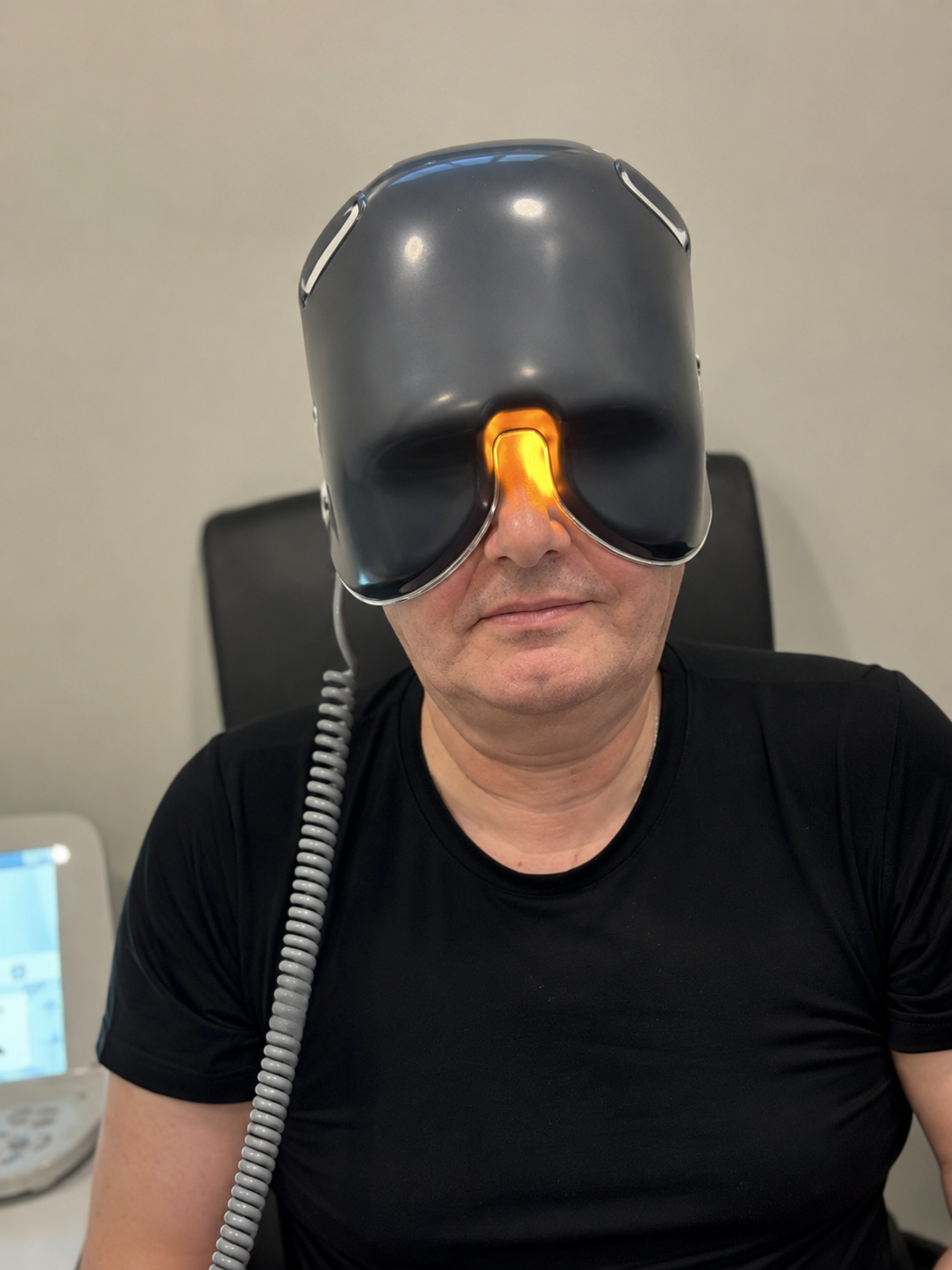
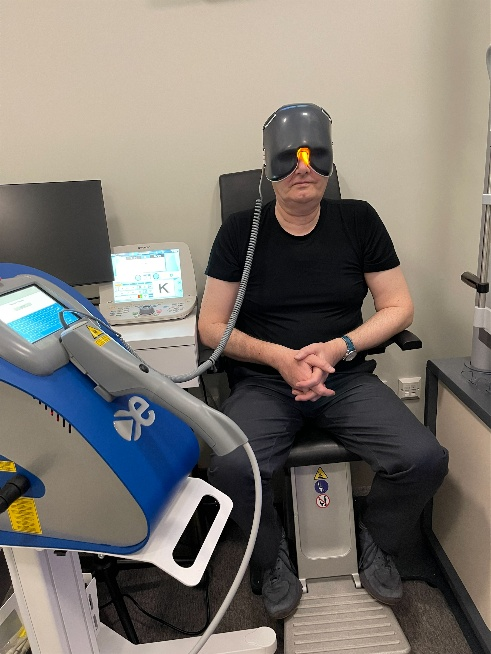
During a photobiomodulation treatment session:
1. You will be seated comfortably.
2. Specially designed light-delivery masks are placed over the eyes.
3. Light at targeted wavelengths (yellow, red, and near-infrared light) is applied for short durations — typically just a few minutes per phase.
Each session typically includes two phases:
The treatment is painless, quick, and non-thermal — no injections, dilation drops, or recovery time are required.
Treatment visits:
8 light therapy sessions spaced 3–4 days apart
Month 3:
Repeat Optomap, fundus autofluorescence, OCT macula scans, and carotenoid levels
Month 6:
Maintenance treatment – 6 light therapy sessions spaced 3–4 days apart
Month 9:
Optomap, fundus autofluorescence, OCT macula scans, and carotenoid levels
Month 12:
Maintenance treatment – 6 light therapy sessions spaced 3–4 days apart
Repeat: every 6 months
The PBM treatment plan includes:
• Initial treatment cycle: Usually 8 sessions over four weeks.
• Maintenance cycles: 6 sessions every 6 months, depending on individual response and disease stage.
Consistent treatment helps maintain cellular stimulation and maximise the long-term benefits of the therapy.
At your first appointment there will be an initial assessment including:
Optomap ultra-widefield scan, fundus autofluorescence, and OCT macula scans.
We will also measure your carotenoid levels to give better insight into lifestyle, dietary habits, and supplement needs.
Historically, there were no effective treatments for dry AMD — only lifestyle adjustments, supplements, and protective measures to slow progression. Photobiomodulation represents a shift because it addresses underlying cellular dysfunction.
Key potential benefits include:
• Supporting cellular energy and repair
• Reducing oxidative stress and inflammation
• Slowing drusen accumulation
• Preserving central visual function for longer
Historically, there were no effective treatments for dry AMD — only lifestyle adjustments, supplements, and protective measures to slow progression. Photobiomodulation represents a shift because it addresses underlying cellular dysfunction.
Key potential benefits include:
• Supporting cellular energy and repair
• Reducing oxidative stress and inflammation
• Slowing drusen accumulation
• Preserving central visual function for longer
Photobiomodulation is generally suitable for adults diagnosed with dry AMD at any stage. Because the therapy works by supporting still-viable retinal cells, earlier intervention often offers the greatest chance of meaningful benefit.
Before starting treatment, a thorough examination including scans (OCT imaging and Optomap with FAF) helps us to assess your retina’s health and tailor a plan to your needs.
Book an Assessment
To book a 15 minute discovery call please contact the practice on 0330 900 2020 or email hello@simonfalk.co.uk.

